
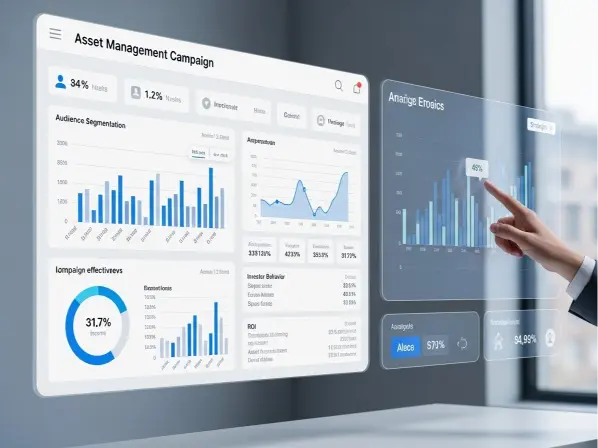
A successful Asset Management Campaign is similar to steering a large ship through changing waters. One smart decision shapes the next. When a firm aligns its strategy with clear goals, the campaign becomes a predictable path, not a guessing game. This article explains how an Asset Management Campaign helps firms maximize ROI, improve decision making, and create sustainable marketing efficiency. It shows how asset management teams build stronger positioning, connect with modern investor needs, and use structured control to achieve long-term results.
Throughout the guide, the content shows how Asset Management Campaign planning combines analytics, communication, and brand-building principles to drive measurable performance.
Table of Contents
Why Strategic Control Matters in an Asset Management Campaign

A Simple Analogy
Running an asset management strategy without a structured campaign is like planting seeds but forgetting where they were planted. With structured tracking, each action, message, and audience segment becomes visible.
Mini Case Study
A midsized firm improved engagement by 40 percent after enhancing its marketing campaigns with personalized email sequences and thought leadership reports. By applying simple best practices, the firm discovered which digital channels delivered the highest engagement rates and redirected its marketing efforts toward segments that matched investor behavior.
Key Components of Strategic Campaign Control

Targeting, Segmentation, and Audience Understanding
Successful firms focus on a clear target audience and use audience segmentation to tailor messages. They also analyze institutional investors, high-net-worth clients, and general investors and clients to uncover behaviors across different touchpoints.
Content, Creativity, and Delivery
Strong campaigns combine content marketing, marketing content, and structured content strategy. They use a mix of whitepapers, webinars, video content, and newsletter formats to deliver insightful content built around thought leadership.
Brand Trust and Market Positioning
An effective campaign supports stronger brand visibility, consistent media relations, and better reputation management. It helps firms attract quality clients and build trust and long-term relationships.
Technology and Data in an Asset Management Campaign

Data-Driven Decisions
Modern firms depend on data-driven marketing, analytics, and optimization to measure campaign effectiveness. They review kpis, review performance dashboards, and align their management plan with client acquisition goals.
AI and Automation
Tools such as ai-driven personalization, marketing automation, and systems like hubspot help streamline the process. These tools help firms make informed decisions, allocate marketing resources, and improve marketing performance.
Using Digital Strategy
With shifting market volatility, smart teams adopt digital strategies, maintain a strong digital presence, and align campaigns with marketing and advertising guidelines.
Common Mistakes Asset Managers Make
Overlooking Messaging
Many asset management firms struggle when their messaging fails to match the needs of the investor. They use general content rather than messages that resonate with real concerns.
Ignoring Long-Term Relationship Planning
Ignoring relationship management leads to lost opportunities. Successful asset managers rely on strong communication to maintain client relationships and support every long-term client.
Lack of Unified Framework
Without a clear framework, teams struggle to coordinate marketing assets, campaign steps, and content plans. A unified strategy helps asset managers must stay aligned with goals and drive results consistently.
Competitive Edge Through Strategic Campaign Development
Managing Resources
Consistent campaign control helps wealth managers, financial advisors, and financial services teams align marketing materials, marketing practices, and internal marketing team workflows.
Achieving Growth
Firms that improve their processes gain a clear competitive advantage, support sustainable growth, and attract the right clients through structured lead generation plans.
Using Real Market Trends
Modern firms adapt to trends in asset management marketing, understand competitive markets, and align strategies with global changes such as esg expectations.
Comparison Table – Strategic vs Traditional Campaign Approach
| Factors | Traditional Approach | Strategic Asset Management Campaign |
|---|---|---|
| Planning | Reactive | Clear management plan |
| Targeting | Broad | Audience segmentation |
| Content | Basic updates | Educational content, thought leadership |
| Tracking | Limited metrics | Detailed kpis, analytics |
| ROI | Hard to measure | Deliver measurable results |
| Channels | Few | Integrated digital channels |
Practical Takeaways
- Map a clear framework before creating content.
- Use marketing strategies that align with audience goals.
- Support marketing asset management with a long-term view.
- Combine strategic marketing and relationship management for retention.
- Follow compliance guidelines such as a well-structured privacy policy.
- Use marketing automation and ai-driven insights to scale.
- Analyze marketing performance regularly.
Conclusion
A strong Asset Management Campaign is more than content, numbers or channels. It is a controlled system that blends clarity, strategy, and measurable actions. When firms combine analytics, storytelling, client trust, and well-planned execution, they do more than market a service. They build confidence. They attract partners. They create a system that grows with them.
In a competitive space, now is the best time to refine campaigns and move toward smarter, more structured growth. Start building, test often, and commit to continuous improvement. That is how a modern firm stays ahead.
FAQs
What makes an Asset Management Campaign effective?
Clear targeting, consistent messaging, and structured tracking supported by content marketing and strong brand positioning.
How can asset managers measure campaign success?
They use analytics, kpis, and performance insights to monitor campaign effectiveness and ROI.
How do digital tools support an Asset Management Campaign?
Platforms with marketing automation, digital channels, and AI help firms personalize outreach and drive results.
Can campaigns help attract new clients?
Yes, structured messaging helps firms attract new clients, improve client relationships, and support retention.
Why do asset management teams need thought leadership?
Thought leadership builds authority, improves brand visibility, and positions firms ahead of competitors.