

Every business, from startups to global enterprises, relies on planning tools to manage its financial outcomes. Two of the most important tools are the budget and forecast. While these terms are often used together, they serve different purposes. Think of a budget as a roadmap—it defines where a business wants to go. The forecast, on the other hand, is the GPS that shows where it’s actually heading. Understanding the difference between budget and forecast helps business owners make smarter financial decisions and improve their business’s financial health.
Table of Contents
What’s the Difference Between Budget and Forecast?
At its core, a budget is a financial plan created for a specific period, usually a fiscal year. It outlines expected revenue and expenses, guiding how to allocate resources. A forecast is an estimate of what’s likely to happen based on historical data and current market conditions.
Here’s a simple comparison:
| Aspect | Budget | Forecast |
|---|---|---|
| Purpose | A plan that sets financial targets | An estimate predicting future trends |
| Based On | Strategic goals and limits | Historical data to predict future results |
| Time Frame | Annual or monthly or quarterly | Updated regularly as conditions change |
| Flexibility | Budgets are relatively static | Forecasts are updated regularly |
| Use | Control spending and achieve targets | React to change and take immediate action |
So, what’s the difference? A budget is an outline of where the company wants to achieve; a forecast is a report of where it’s heading right now.
Key Differences Between Budgeting and Forecasting
The key differences between budgeting and forecasting go beyond numbers—they shape how management teams think.
A budget is a plan, while a forecast is an estimate. Budgeting involves setting spending limits and income goals. Forecasting allows management to adjust to actual circumstances and stay responsive.
In short, the key difference between a budget and a forecast lies in intent:
- The budget outlines what the business wants to achieve.
- The forecast typically shows what is likely to happen.
This approach ensures management wants to take the right action when reality deviates from the original budget.
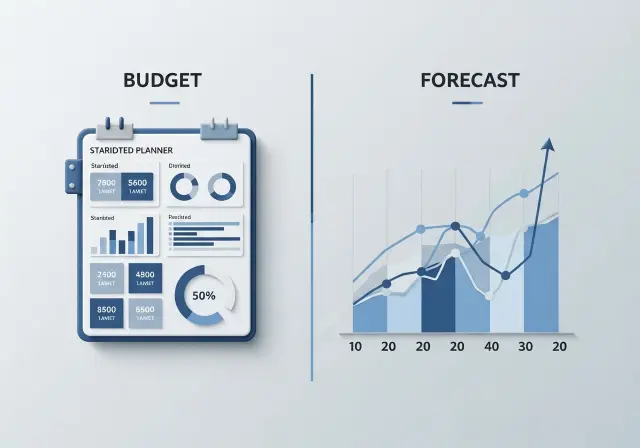
Budget vs Forecast – Why Both Matter
Both tools complement each other—budgeting and forecasting go hand in hand. A budget is a financial benchmark, while the forecast might serve as a dynamic management tool.
Imagine a business plan as a movie script—the budget is the planned storyline, and the forecast is the actual movie being filmed. Forecasting are tools for monitoring real-world progress. Budgeting and financial forecasting together enable companies to operate effectively for the future.
Business owners use financial documents, such as financial statements, to compare budget to actual results. When management wants to evaluate performance, they rely on actual results to determine how well the company followed the budget or a forecast.
Budgeting Process and Practical Example
A budget typically begins with analyzing financial data and historical data to set goals. Management may include targets for debt reduction, growth, and profitability. A budget is a financial plan designed to ensure the company wants to achieve sustainable success over a certain period of time.
Example:
A retail company plans to create a budget allocating $500,000 for marketing, $1M for operations, and $300,000 for staff salaries. But halfway through the year, forecasting software like LivePlan shows actual revenue is down by 10%. The forecasting allows them to adjust spending, spend less on ads, and focus on debt management. This flexibility turns planning into immediate action.
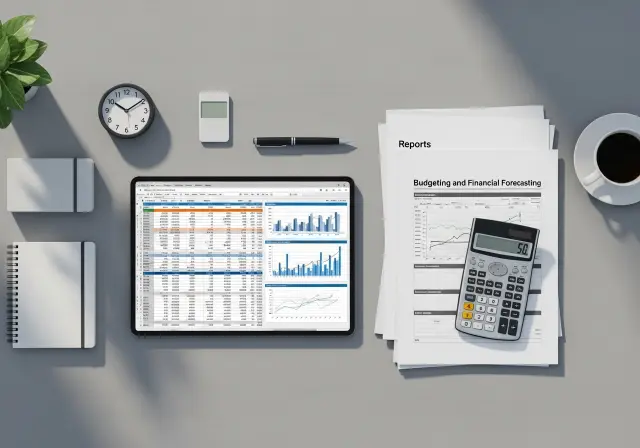
Using Forecasting Software for Better Accuracy
Modern forecasting software and budgeting and forecasting software simplify this process. They integrate financial data, historical data, and AI-driven financial forecasting software to create financial projections quickly.
Forecasting go hand in hand with tools like QuickBooks or Float, which help compare the budget or a forecast with actual performance.
When management wants to take proactive steps, they can use forecasting are often used methods to adjust to business conditions. This helps companies make financial forecasting estimates and respond to market shifts dynamically.

Key Differences Between Budgeting vs Forecast
Here’s another clear view of the key differences between budgeting vs forecast concepts:
| Feature | Budget | Forecast |
|---|---|---|
| Nature | Prescriptive – sets targets | Predictive – estimates future trends |
| Change Frequency | May only be updated yearly | Updated regularly as markets evolve |
| Purpose | Align spending with goals | React to future financial outcomes |
| Data Source | Strategic business plan | Based on historical data |
| Outcome | Control | Adaptation |
So, unlike budgeting, which is relatively static, forecasting software supports management teams with real-time adaptability. Forecasting software like Anaplan or Planful helps compare budget to actual outcomes and visualize future financial outcomes.
How Businesses Use Both Effectively
Businesses use budgets to set boundaries and forecasts to remain agile. A budget may include revenue goals, expense caps, or savings targets, while a forecast typically estimates future financial performance under changing business conditions.
Unlike a budget, forecasts are more flexible and updated regularly to match market trends.
Practical takeaway:
- Use financial reports monthly.
- Track actual results.
- Adjust your forecast and plan for immediate action.
This balance ensures companies stay aligned with business’s long-term objectives and stay financially resilient.

Conclusion
In summary, understanding the difference between budget and forecast helps any organization navigate uncertainty. A budget is an outline of what the business wants to achieve, while a forecast is a report predicting future financial direction. Both are essential in maintaining a business’s financial health.
To plan smarter, use financial tools, forecasting software, and financial documents together. Remember, success lies not just in creating a plan—but in adapting when reality changes. Take time to review, refine, and respond.
FAQs
What is the key difference between a budget and a forecast?
A budget is a financial target for a specific period, while a forecast is an estimate based on historical data and market conditions.
How do budgets and forecasts help a company’s financial health?
They help business owners monitor actual performance, control expenses, and plan effectively for the future.
Can a forecast replace a budget?
No, budgeting and financial forecasting serve different purposes. The budget outlines goals, while forecasting allows adaptation.
How often should forecasts be updated?
Forecasts are updated regularly, often monthly or quarterly, depending on business conditions.
Why should management use forecasting software?
Because forecasting software like Float or Fathom can analyze financial data, link financial statements, and show actual results to determine trends faster.